
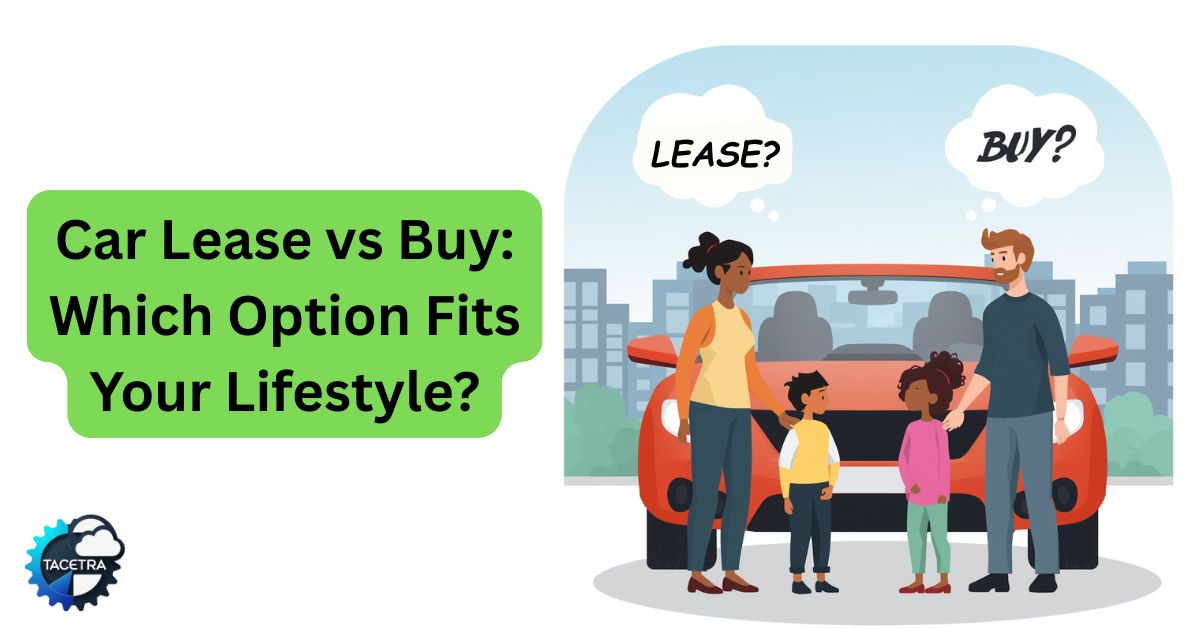
Choosing a new car is one of those rare life moments where your heart and your wallet usually want completely different things. You walk onto the lot, and that “new car smell” starts working its magic. But then you’re faced with the ultimate fork in the road: do you sign a lease and enjoy the honeymoon phase, or do you commit to a purchase for the long haul?
The debate over leasing versus buying is often framed as a battle of “smart money” versus “status seeking,” but the reality is much more nuanced. Whether one is better than the other depends entirely on your lifestyle, your commute, and how much you value your time.
The Philosophy of the “Forever Payment”
Leasing often gets a bad rap because, at its core, it’s a subscription model for transportation. You pay a monthly fee to use a vehicle during its most reliable (and most expensive) years, and then you hand it back. You never reach that glorious day where the title arrives in the mail and your monthly payment drops to zero.
However, for a certain type of driver, the “forever payment” is a feature, not a bug. If you are the person who finds yourself browsing car listings every three years anyway, leasing protects you. When you buy a car, you take on the risk of its resale value. If the model you bought develops a reputation for transmission issues or if the market shifts toward electric vehicles faster than expected, your trade-in value plummets. With a lease, that’s the dealership’s problem, not yours.
When Leasing Makes Practical Sense
Leasing isn’t just for people who want to look flashy in a new BMW. There are several scenarios where it is actually the more pragmatic move:
1. The “Early Adopter” Tax If you are looking at Electric Vehicles (EVs), the technology is moving at breakneck speed. A battery from 2024 will likely look like ancient history by 2028. By leasing an EV, you ensure that you can trade up to the newest battery tech and range improvements without being stuck with an obsolete asset. Sites like Edmunds provide excellent calculators to see how these tech shifts impact residual values.
2. The Business Owner’s Edge If you use your car for business, the IRS often makes it much simpler to deduct lease payments than to calculate complex depreciation schedules for a car you own. It keeps your balance sheet clean and ensures your professional image stays polished with a modern vehicle.
3. The “Zero Maintenance” Lifestyle For some, the cost of a car isn’t just the sticker price; it’s the time spent at the mechanic. Most leases coincide perfectly with the manufacturer’s bumper-to-bumper warranty. If the AC stops blowing cold or a sensor goes haywire, you drop it off, take a loaner, and pay nothing. You are essentially paying a premium for “predictability.”
The Financial Power of Ownership
On the flip side, if your goal is to build wealth, buying a car and “driving it into the dirt” is almost always the winning strategy.
When you buy, you are building equity. Even if a car depreciates, a paid-off 2018 Toyota Camry is still worth thousands of dollars. More importantly, once that five-year loan is finished, you might have another five to seven years of “free” driving. If you take that former $400 car payment and divert it into a high-yield savings account or an index fund, the long-term math heavily favors the owner.
Practical Tips for the Decision Matrix
Before you sign any paperwork, run through these three filters:
The Mileage Test Standard leases usually cap you at 10,000 or 12,000 miles per year. If you have a 30-mile daily commute plus weekend road trips, you will likely blow past those limits. At 25 cents per extra mile, a cross-country trip could end up costing you an extra $1,000 at the end of your term. If you can’t predict your mileage, buy the car.
The “Life Stage” Check Are you planning on starting a family? Getting a dog? Moving across the country? A lease is a rigid contract. If you lease a sporty coupe today and find out you’re having twins in two years, getting out of that lease early can be a financial nightmare. Buying offers the flexibility to sell the car whenever your life dictates a change.
The Maintenance Habit Be honest with yourself: do you take care of your things? Leases require you to return the car in “excellent” condition. If your kids treat the backseat like a cafeteria or you tend to ignore door dings, you might face a “reconditioning fee” of thousands of dollars at the end of the lease. If you’re a “messy” driver, ownership is much more forgiving.
The Bottom Line
Leasing is a service; buying is an investment. If you view a car as a tool to get from A to B with the least amount of friction and you can afford the monthly cost of “newness,” leasing is a valid lifestyle choice. But if you view a car as a drain on your net worth that needs to be minimized, buy a reliable three-year-old used car, pay it off quickly, and enjoy the years of payment-free living.
Ultimately, the best car deal isn’t the one with the lowest monthly payment—it’s the one that lets you sleep best at night. For more detailed breakdowns on specific car reliability, resources like Consumer Reports are invaluable for seeing which models are actually worth owning for a decade.
Further Reading: The ROI of an MBA in Today’s Job Market
Discover more from TACETRA
Subscribe to get the latest posts sent to your email.
