
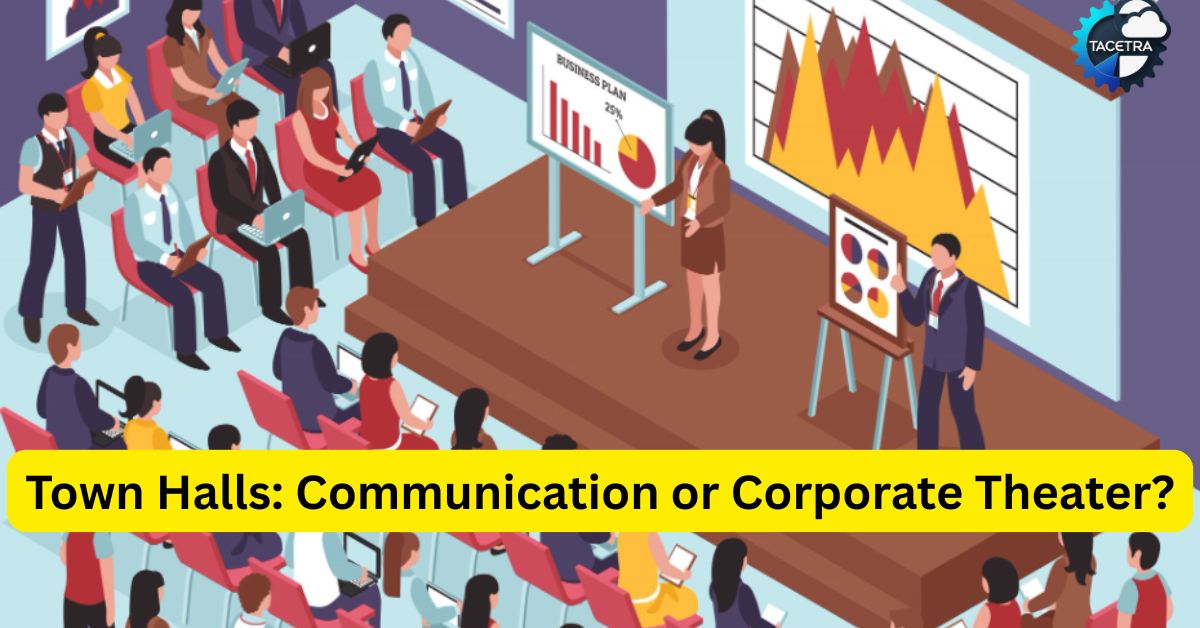
If you listen to leadership, the answer is usually “yes.”If you listen to employees, the answer is… complicated at best, and brutally honest at worst.
After going through the discussion and reactions in this Reddit thread, one thing becomes clear: most employees don’t hate the idea of town halls—they hate what they’ve become.
The uncomfortable truth: most town halls feel performative
Scroll through the comments and a pattern jumps out immediately. Words like “performative,” “waste of time,” and “fluff” come up again and again. One commenter summed it up bluntly:
“No. If you’re going to lie to me, at least don’t waste my time.”
That sentiment isn’t just frustration—it’s a trust issue.
Many employees feel town halls are less about transparency and more about optics. Leadership presents polished narratives, avoids uncomfortable questions, and leaves people with the sense that the real conversation is happening somewhere else.
And once that perception sets in, it’s hard to undo. In one story, an employee recalled how someone asked a tough question—and was later laid off. Whether related or not, the damage was done: no one asked real questions again.
That’s not a communication problem. That’s a credibility problem.
Why employees tune out (even when they show up)
There’s a reason so many town halls feel like background noise.
Research and workplace surveys have long shown that employees find these meetings “meh” at best, often citing boring presentations, poor time use, and lack of real engagement . The Reddit discussion echoes that almost perfectly—but with sharper edges.
A few recurring frustrations stand out:
1. One-way communication disguised as dialogue
Town halls are supposed to be conversations. In reality, they’re often executive monologues with a short, heavily filtered Q&A at the end.
Employees notice what isn’t said more than what is. As one commenter put it, the real signal is in the “non-answers”—especially around layoffs, pay, or strategy.
2. Pre-scripted questions kill authenticity
When questions are curated or softened, people assume the hard ones are being avoided. Even large companies have faced backlash for filtering or summarizing employee questions in ways that reduce directness .
The result? Participation drops. Why ask a question if it won’t be answered honestly?
3. Tone-deaf messaging
Nothing erodes goodwill faster than celebrating company success while employees are struggling.
Multiple commenters described town halls where executives highlighted growth, travel, or perks—right after denying raises or cutting benefits. That disconnect sticks.
And it’s not just anecdotal. Workplace stories show morale can collapse instantly when leadership uses “positive” events to deliver bad news .
4. Forced enthusiasm doesn’t work
Icebreakers, games, and “fun segments” came up a lot—and not in a good way.
What leadership sees as engagement often feels like forced participation. Employees don’t want to be entertained; they want to be informed and respected.
But here’s the nuance: employees don’t hate town halls
Despite all the criticism, the thread isn’t entirely negative.
Some employees actually find value in town halls—but only under certain conditions.
A few perspectives stood out:
- For some, it’s the only time they see senior leadership and understand who’s making decisions
- Others appreciate visibility into company strategy or financials
- A few even enjoy well-structured sessions that highlight real work and recognize contributors
In other words, the format isn’t broken. The execution usually is.
This aligns with broader workplace insights: employees do want access to leadership—but they want it to feel real, not staged.
The real problem: trust, not format
The biggest takeaway from the discussion isn’t about slides, timing, or meeting structure.
It’s about trust.
Town halls fail when employees believe:
- Questions are filtered
- Answers are vague or political
- Leadership is out of touch with reality
And once that belief sets in, even a well-run town hall won’t land.
On the flip side, when employees feel they can ask anything—and actually get a straight answer—the entire dynamic changes. Engagement goes up, not because the format improved, but because credibility did.
So, do employees like town halls?
Here’s the honest answer:
Employees don’t like most town halls.
But they would like them—if they felt honest, relevant, and worth their time.
Right now, too many town halls are treated as communication theater: polished, controlled, and ultimately disconnected from what employees actually care about.
Until that changes, people will keep showing up…
but mentally checking out.
Final thought
Town halls aren’t inherently broken. They’ve just drifted too far from their original purpose.
A real town hall—by definition—is a place where leaders are accountable to the people in the room.
Most corporate versions flipped that dynamic.
And employees can tell.
Until that balance is restored, the question won’t be “Do employees like town halls?”
It’ll be: “Why are we still doing them this way?”
Further Reading: From Employee to Entrepreneur: Safe Leap Guide.
Discover more from TACETRA
Subscribe to get the latest posts sent to your email.
