
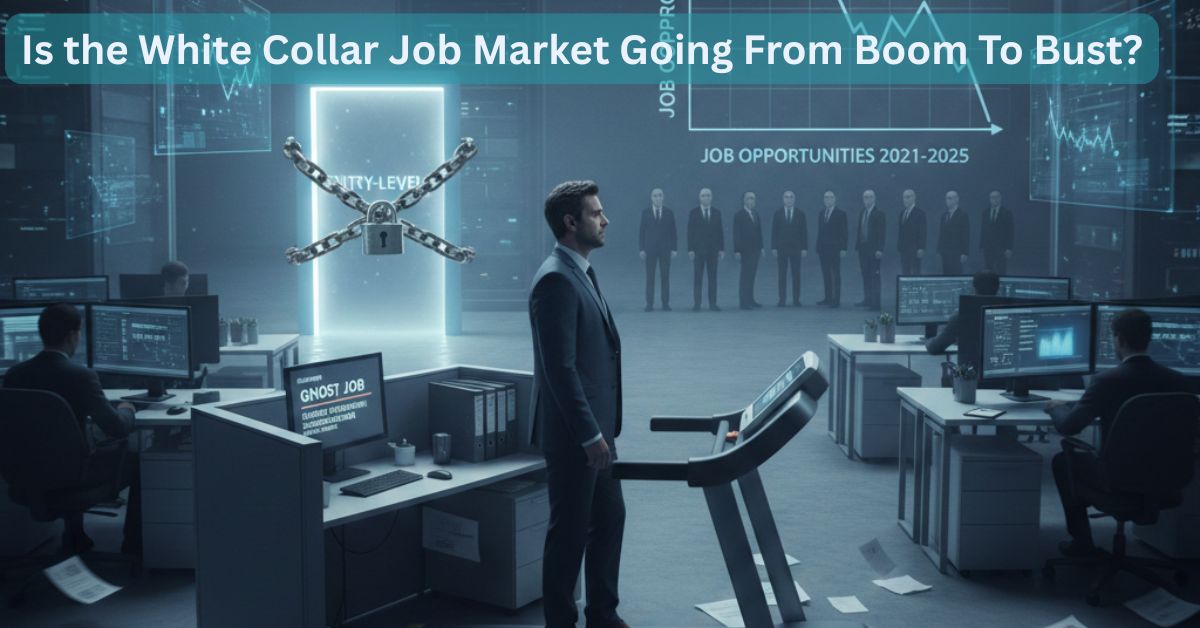
In 2021, the professional world felt like an open frontier with the job market booming with highly paid jobs. We called it the “Great Resignation.” It was an era of unprecedented leverage where workers held the cards, signing bonuses were handed out like candy, and a LinkedIn profile was a revolving door of recruiter messages. If you weren’t happy on Monday, you could have a better-paying offer by Friday.
But somewhere between then and now, the music stopped. The chairs were taken away. And for many, the floor dropped out entirely.
What we are witnessing in the current job market isn’t just a standard “cooling off” period or a typical economic cycle. It is a fundamental, jarring reversal of the professional contract. Those who were thriving four years ago now find themselves in a landscape that feels unrecognizable, hostile, and—above all else—deeply inefficient.
The Rise of the “Ghost” Market
The most maddening part of the modern job hunt is the lack of transparency. We see thousands of openings on career boards, yet the silence is deafening. We are living in the era of the “Ghost Job“—postings that exist to signal growth to shareholders or to “keep a talent pipeline warm” with no actual intention of hiring.
For the applicant, this is psychological warfare. You spend hours tailoring a resume, writing a cover letter, and navigating a clunky application portal, only to realize you’ve sent your credentials into a digital void. When companies do hire, the process has become a marathon of endurance. Seven rounds of interviews, unpaid “test projects,” and personality assessments have become the norm for mid-level roles that used to require a two-call vibe check.
Experience Is No Longer a Shield
The most sobering realization in the current market is that experience has lost its protective power. There is a growing cohort of professionals with a decade of expertise who are being told they are “overqualified” for mid-level roles and “too expensive” for everything else.
At the same time, the “entry-level” door has been bolted shut. Roles that should be for recent graduates now demand three years of specific software experience and a master’s degree, all for a salary that hasn’t adjusted for the cost-of-living spikes of the last three years. We’ve reached a point where the requirements are for a “rockstar,” but the compensation is for a roadie.
The AI Shadow
While corporate leaders tout AI as a tool for “efficiency,” on the ground, it feels like a barrier. Automated tracking systems have become so aggressive that a human eye rarely sees a resume unless it’s a 100% keyword match. There is a growing suspicion that many roles aren’t being filled because companies are waiting to see if a LLM or an offshore team can do the job for pennies on the dollar. This “wait and see” approach has frozen the market in place.
The Human Cost
Beyond the statistics and the interest rates lies a massive, collective exhaustion. There is a specific kind of “hiring fatigue” that sets in after six months of being ghosted. It erodes self-worth and breeds a deep cynicism toward the corporate world. The loyalty that companies spent decades trying to build is being torched in real-time.
The power dynamic has swung back to the employers, and they are using that leverage to depress wages and demand more “hustle” for less security. But this is a short-term win for the balance sheet. In the long run, you cannot build a functional economy on a workforce that feels disposable, undervalued, and perpetually anxious.
The market will eventually turn again—it always does. But for those currently grinding through the “Great Reversal,” the memory of how quickly the door was slammed shut won’t be easily forgotten.
Further Reading: Starting in the Stock Market? Brutally Honest Advice from Penny Stock Pros
Discover more from TACETRA
Subscribe to get the latest posts sent to your email.
