
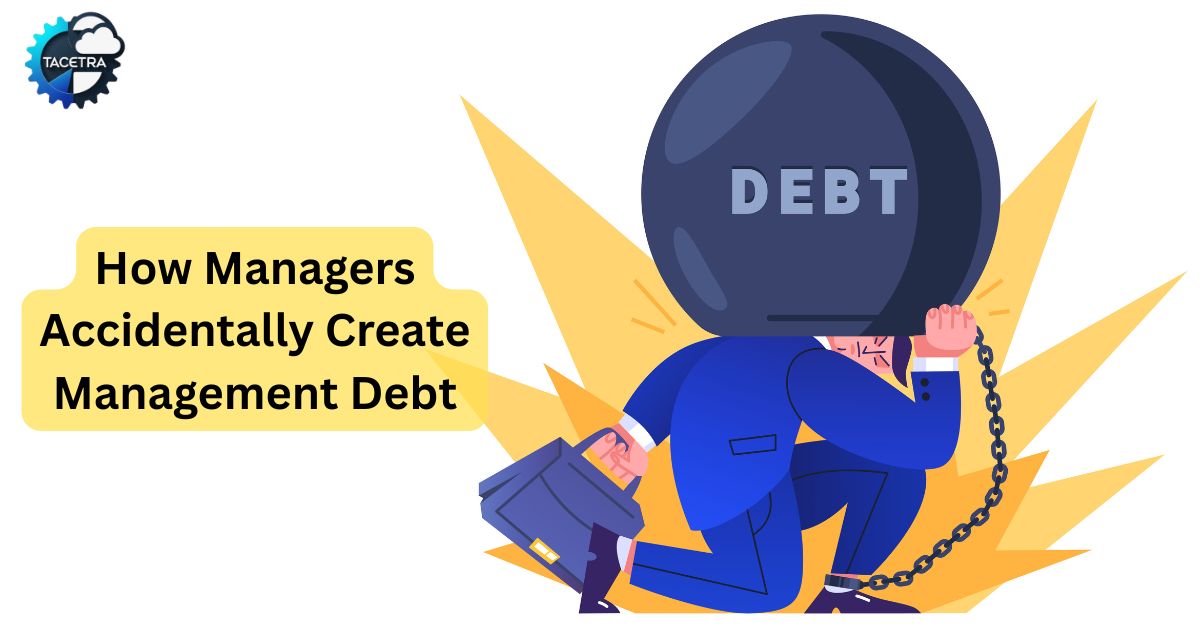
We talk a lot about technical debt—those quick-and-dirty coding fixes that eventually come back to haunt a software project. But there is a far more insidious version that rarely gets a seat at the leadership table: Management Debt.
If you’ve ever avoided a difficult performance review, let a vague process slide, or hired someone quickly just to “get a body in the chair,” you’ve taken out a high-interest loan. And just like any financial debt, the interest on management shortcuts compounds daily until your team’s culture, morale, and output eventually go bankrupt.
What Does Management Debt Actually Look Like?
Management debt is the accumulation of all the decisions you didn’t make. It’s the result of choosing short-term comfort over long-term stability.
Think about the employee who is technically brilliant but toxic to the team culture. Every day you avoid having the “behavioral” conversation with them, you are accruing debt. The interest is paid by your high performers, who grow resentful and eventually check out or quit.
It also shows up in organizational ambiguity. When roles aren’t clearly defined, or when a manager fails to provide the “why” behind a pivot, the team begins to operate on assumptions. Over time, these small gaps in communication create a “fog of work” where everyone is busy, but no one is aligned.
Research from Harvard Business Review consistently highlights that unclear expectations and weak communication are among the most common sources of workplace friction. When managers delay clarifying issues, teams gradually lose alignment.
This is how management debt forms: not through one bad decision, but through many small ones left unresolved.
The High Cost of the “Inherited Mess”
The most painful part of management debt is that the person who incurs it is rarely the one who has to pay it back. We often see this when a new leader takes over a department. They find a team with no standard operating procedures, unresolved interpersonal conflicts, and a total lack of accountability.
Fixing these issues after years of neglect is exhausting. It requires “paying down” the debt through painful restructures, uncomfortable terminations, and the slow, grueling process of rebuilding trust. As Harvard Business Review points out, inheriting a team requires a delicate balance of listening and decisive action to reset the cultural baseline.
The Small Leadership Habits That Create Debt
Most management debt starts with good intentions. Leaders want to maintain harmony, avoid unnecessary confrontation, or focus on urgent work instead of uncomfortable discussions. But avoiding short-term discomfort can create long-term confusion.
For example, imagine an employee who occasionally misses deadlines. Instead of addressing the pattern early, the manager works around it. Other team members compensate. Eventually the behavior becomes normalized.
By the time the issue is addressed, it feels bigger and more personal than it needed to be. This pattern is well documented in leadership research from MIT Sloan Management Review, which emphasizes that early feedback prevents small problems from becoming structural issues.
In other words, many team problems are not people problems. They are delayed management decisions.
Practical Ways to Pay Down (and Avoid) Management Debt
If you feel like your team is currently underwater, you can’t fix it overnight. However, you can stop the bleeding by changing how you handle daily friction. Here are a few ways to keep your “management balance” at zero.
1. Prioritize the “Five-Minute” Hard Conversation
Most management debt starts with a small hesitation. You see something that isn’t right, but you don’t want to ruin the mood or cause a scene. Instead of waiting for the quarterly review, address it in the moment. Radical Candor, a concept popularized by Kim Scott, suggests that giving feedback immediately—with personal care and direct challenge—prevents resentment from building up.
2. Clarity Over Certainty
You don’t always have to have the perfect answer, but you do need to provide clarity. Management debt thrives in gray areas. Be explicit about who owns which decision and what “success” looks like for a specific project. If a process is broken, don’t just create a workaround; take the extra hour to document a permanent fix.
Additionally, when leadership changes direction without context, employees fill the gap with speculation. Over time this creates unnecessary distrust. Even a brief explanation of the reasoning behind decisions can dramatically improve alignment. Employees do not always need to agree with leadership decisions, but they benefit from understanding the logic behind them.
3. Stop “Hiring for Now”
The fastest way to rack up debt is a bad hire. When you are desperate to fill a role, it’s easy to ignore red flags. However, the cost of a bad hire is often estimated at 1.5 to 2 times the employee’s salary, not to mention the damage to team morale. If you aren’t 100% sure about a candidate, wait. The temporary workload of an open position is far cheaper than the long-term debt of a poor culture fit.
4. Audit Your “Process Gaps” Monthly
Once a month, take a step back from the daily fire-fighting and ask: What am I currently “working around” instead of fixing? Is there a meeting that everyone hates but attends anyway? Is there a conflict between two departments that everyone just accepts as “the way it is”? Identifying these friction points is the first step toward clearing the ledger.
5. Document Decisions and Ownership
Many teams underestimate the value of simple documentation. When decisions live only in meetings or informal conversations, people remember them differently. Over time this creates conflicting assumptions about what was agreed upon. Even lightweight documentation—such as project summaries or decision notes—can prevent this problem.
Frameworks like the RACI model, often referenced by organizations such as Project Management Institute, help teams clearly define who is responsible, accountable, consulted, and informed for key decisions.
Clear ownership reduces ambiguity before it spreads.
The Bottom Line: The Quiet Work That Makes Teams Healthy
Leadership is often described as a series of grand visions and strategic breakthroughs. In reality, great leadership is mostly about the mundane, unsexy work of keeping the debt low. It’s about having the boring conversations, writing the clear emails, and holding people accountable even when it’s inconvenient.
The next time you’re tempted to let a small issue slide to “save time,” remember that you aren’t actually saving time—you’re just borrowing it from your future self at a very high interest rate. Pay it now, or pay much more later.
Further Reading: Hidden Costs of Chasing Certifications Nobody Talks About
Discover more from TACETRA
Subscribe to get the latest posts sent to your email.
