
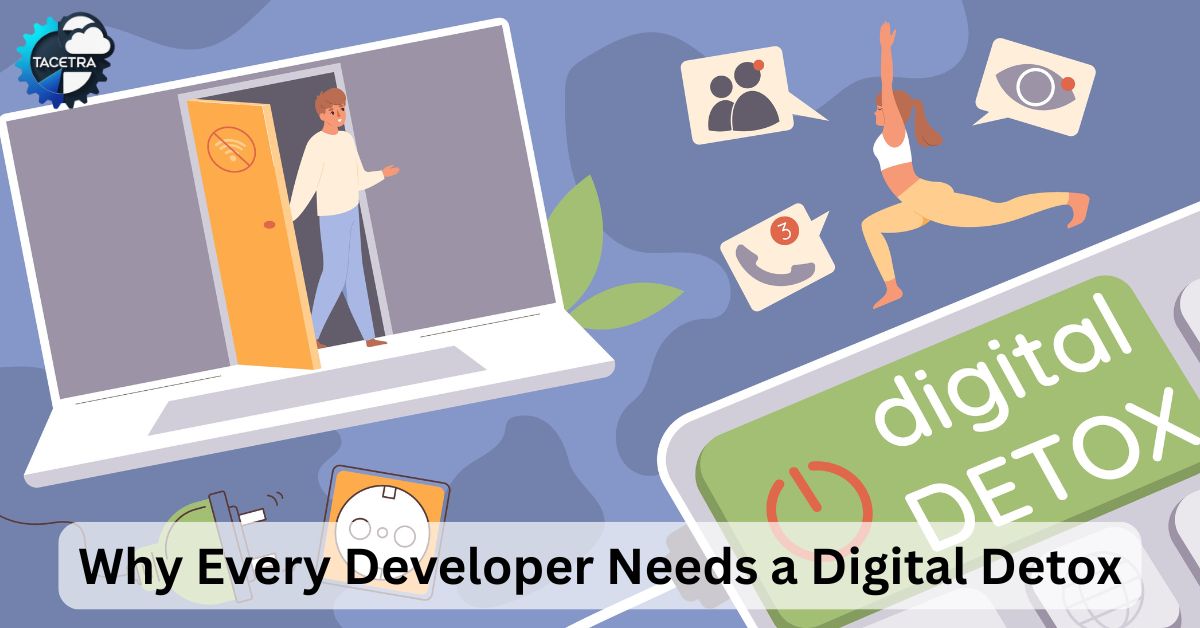
If you’re a developer, you’ve probably experienced this before. You sit down to solve a tricky bug, and within minutes Slack lights up, GitHub notifications appear, your email pings, and your phone buzzes. An hour later, you’ve been busy—but the bug is still there.
The problem isn’t a lack of skill. It’s the growing cost of constant digital interruptions.
Modern software development demands deep thinking, yet today’s work environment is designed to fragment attention. Microsoft found that 68% of employees say they don’t have enough uninterrupted focus time during the workday, while communication now consumes more time than actual creation for many knowledge workers.
A digital detox isn’t about abandoning technology. It’s about using it intentionally so you can spend more time writing quality code and less time reacting to notifications.
Why developers lose focus so easily
Programming requires sustained concentration. Every interruption forces your brain to reload the mental model of your codebase.
Research by Gloria Mark at the University of California, Irvine, has consistently shown that workplace interruptions significantly reduce focus and productivity. Even when an interruption lasts only a few seconds, recovering your previous level of concentration takes considerably longer than most people realize. Studies on distraction-blocking tools have also shown measurable improvements in focus when non-work distractions are removed.
Developers face a perfect storm of interruptions:
- Slack messages demanding immediate responses
- Constant email alerts
- Pull request notifications
- Social media “quick checks”
- Endless browser tabs
- Meetings scattered throughout the day
Microsoft’s Work Trend Index also reports that inefficient meetings are employees’ biggest productivity obstacle, and many workers feel their days are fragmented by constant communication.
The hidden connection between distraction and burnout
Burnout isn’t simply working long hours.
The World Health Organization defines burnout as an occupational phenomenon resulting from chronic workplace stress that hasn’t been successfully managed. It is characterized by exhaustion, increased mental distance from work, and reduced professional effectiveness.
For developers, burnout often begins with constant context switching.
Instead of spending two uninterrupted hours building a feature, the day becomes a series of five-minute coding sessions interrupted by messages, meetings, and notifications. By evening, you’ve worked all day but accomplished very little.
That frustration compounds over weeks and months.
Start by auditing your digital habits
Before changing your routine, understand where your attention is going.
Use tools like RescueTime, Screen Time (iOS), or Digital Wellbeing (Android) for one week. You don’t need to obsess over every minute—just look for patterns.
Ask yourself:
- How often do I check Slack without being prompted?
- How many browser tabs stay open all day?
- Which notifications actually require immediate action?
- How much time do I spend consuming information instead of creating it?
Most developers discover they aren’t losing hours to one big distraction. They’re losing minutes dozens of times every day.
Protect your deep work
Cal Newport popularized the idea of deep work—long, uninterrupted periods of focused thinking. For developers, this is often where the best code gets written.
Instead of reacting to messages all day, schedule dedicated focus blocks.
A 90-minute coding session with notifications disabled is usually more productive than three hours of interrupted work.
Tell your team when you’re in focus mode. Most colleagues respect clear boundaries when expectations are communicated in advance.
Build a workspace that encourages focus
Your environment influences your attention more than willpower does.
Keep your phone out of reach during coding sessions. Close browser tabs that aren’t relevant to your task. Use a clean desktop and a dedicated workspace if possible.
If background noise is distracting, try instrumental music or white noise instead of podcasts with spoken words.
Small environmental changes reduce the number of decisions your brain has to make throughout the day.
Let technology reduce distractions—not create them
Ironically, some apps can help you spend less time online.
Freedom and LeechBlock can temporarily block distracting websites, while RescueTime helps you understand how your day is actually spent.
These tools aren’t magic. They’re simply guardrails that make it easier to stay focused when your attention starts drifting.
Don’t aim for perfection
A digital detox doesn’t mean disappearing from Slack for a week.
Instead, create simple rules:
- Check email at scheduled times instead of constantly.
- Turn off notifications that don’t require immediate action.
- Keep one or two daily focus blocks sacred.
- Take short walks away from your screen between coding sessions.
These habits are sustainable because they work with your job—not against it.
Focus is becoming a competitive advantage
As software becomes more complex and AI automates routine coding tasks, a developer’s biggest advantage isn’t typing speed.
It’s the ability to think deeply.
Microsoft’s research shows that workers increasingly struggle to find uninterrupted focus time, while engineering research continues to emphasize minimizing interruptions to improve developer productivity and satisfaction.
Developers who protect their attention don’t just write more code. They solve harder problems, make fewer mistakes, and finish the day with more energy.
A digital detox isn’t about disconnecting from technology.
It’s about reconnecting with the kind of work that made you enjoy programming in the first place.
Frequently Asked Questions
What is a digital detox for developers?
A digital detox for developers is a deliberate break from screens, notifications, and constant connectivity to regain focus in a connected world. Detox involves stepping away from coding marathons, social media distractions, and endless email checks to recharge mentally and boost productivity.
Why do developers specifically need a digital detox?
Developers often face intense screen time, debugging under pressure, and the pull of online communities, leading to burnout and scattered attention. ‘This practice counters the always-on culture, helping restore deep work capabilities and prevent cognitive overload from multitasking in tech environments.
How can developers implement a simple digital detox routine?
To start, developers can set device-free hours during meals or before bed, use apps to block distracting sites, and engage in offline activities like walking or reading physical books. Begin with short 24-hour detoxes to build habits that sharpen coding focus without isolation.
What are the key benefits of digital detox for regaining developer focus?
Benefits include improved concentration on complex tasks, reduced stress from constant alerts, and enhanced creativity for problem-solving. This leads to higher code quality, better work-life balance, and a refreshed mindset in an era of perpetual digital demands.
What challenges might developers face during a digital detox?
Common hurdles include FOMO from missing project updates, withdrawal from coding highs, or habitual phone checks. One can address these by having accountability partners, gradual reduction in screen time, and replacing digital habits with analog pursuits to ease the transition back to focused development.
How can developers maintain focus after completing a digital detox?
Post-detox, developers should establish boundaries like designated ‘focus blocks’ without interruptions, mindfulness practices, and regular mini-breaks. Sustaining gains involves auditing digital tools for necessity and prioritizing deep work to thrive long-term in a hyper-connected tech landscape.
Further Reading: The Software Engineering Burnout Loop: Why It Happens and How to Break It
Discover more from TACETRA
Subscribe to get the latest posts sent to your email.
