
You know you’re qualified. You’ve spent hours polishing your resume, you tailor the cover letter, and you hit submit with optimism. Then… nothing. No calls, no interviews — just silence. Sound familiar?
This frustrating cycle isn’t about your experience. It’s about how your resume is being read.
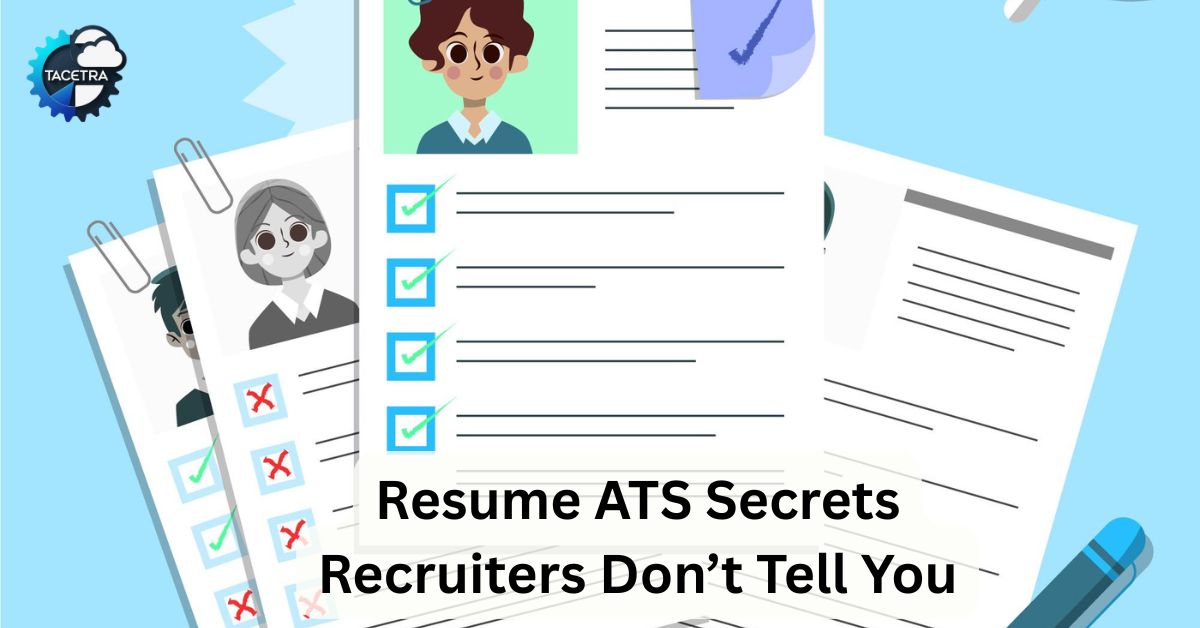
In today’s job market, your application usually isn’t seen by a human at first. Instead, most employers rely on software known as an Applicant Tracking System (ATS) to filter resumes before a real person ever looks at them. If your resume isn’t optimized for these systems, it may never reach a hiring manager — no matter how strong your qualifications are.
Here’s a closer look at what’s going on, backed by real data, and exactly how to fix the most common resume mistakes that silently sabotage your applications.
The Hard Truth: The ATS Is the New Gatekeeper
If you’re applying online, your resume probably faces two filters before a recruiter sees it.
First, it’s processed by an ATS — software that parses your text, extracts key information, and ranks your resume based on relevance. Then, only the top-ranked resumes are passed on to humans.
Studies show that virtually all Fortune 500 companies use ATS software to screen applications. In fact, one report found that around 97.8% of Fortune 500 employers rely on ATS to process resumes.
Those systems are powerful. In job markets today, about 75% of resumes submitted online are never seen by a human recruiter because they fail to score well enough in ATS filters. While this doesn’t necessarily mean they’re immediately rejected, it does mean they are buried deep in the stack.
ATS isn’t just a “woke buzzword” — it’s the reality of how modern hiring works.
Blunder #1 — Fancy Layouts That ATS Can’t Read
It’s tempting to use creative, two-column Canva templates with icons and colors. They look great to the eye, but ATS doesn’t see the page like you do.
Many ATS tools parse text strictly from top to bottom in a linear way. Anything outside of that format — columns, tables, embedded graphics, text boxes — can confuse the parser, meaning important information gets garbled or skipped entirely.
Fix: Use a clean, single-column layout with standard section headings (like “Experience” and “Skills”). Choose easy-to-read fonts like Arial or Calibri. This isn’t “boring” — it’s strategic: it maximizes the chance that ATS reads your resume accurately.
Blunder #2 — Starting With an Objective Instead of a Summary
Many applicants begin with an “Objective” like:
“Seeking a challenging role where I can grow professionally.”
Here’s why that doesn’t help: it tells the employer what you want, not what you bring to the table.
Recruiters and ATS alike prefer a Professional Summary that highlights your key qualifications and accomplishments. Data shows that resumes with effective summaries are significantly more likely to be read in full by hiring professionals.
Instead of focusing on you, focus on your value.
Better example:
Experienced Digital Marketing Specialist with 7+ years driving 40% year-over-year increases in organic traffic through targeted SEO and content strategies. Proven success managing cross-functional teams and optimizing campaigns with a $50,000 monthly budget.
That’s the kind of opening both ATS and recruiters respond to.
Blunder #3 — Ignoring Keywords and Job Match
ATS systems evaluate how closely your resume matches the job description using keywords — terms that signal relevant skills, tools, and qualifications.
But there’s a big difference between keyword stuffing (just pasting the job description verbatim) and keyword matching (strategically reflecting relevant skills and phrases).
Jobscan data suggests that ATS-optimized resumes are about three times more likely to be seen by a human recruiter than unoptimized ones.
Instead of copying and pasting, take time to identify the key skills and language that appear across multiple job listings for your target role. Then, naturally weave those terms into your resume — especially in your experience bullets and skills section.
For example, if “strategic planning” appears repeatedly in listings, show it in context:
Led annual strategic planning process for a team of 10, resulting in a 15% reduction in operational overhead.
This shows impact, not just keywords.
Blunder #4 — Wasting Space on “References Available Upon Request”
This one’s a classic example of outdated advice. Every hiring manager already assumes you will provide references when asked.
Using precious space for this line means less room for results-driven accomplishments that actually matter. Replace filler with quantified impact — that’s what gets attention.
Blunder #5 — Focusing on Tasks Instead of Results
A common issue in weak resumes is listing duties instead of accomplishments.
Compare these two lines:
Before:
Managed customer service inquiries.
After:
Resolved 40+ customer inquiries daily with a 98% satisfaction rating, ranking top in the department for three consecutive quarters.
Which one tells a recruiter that you made a measurable impact?
Quantifying results — with percentages, dollar amounts, or counts — brings your achievements to life. Recruiters scan resumes in about 6–7 seconds, and numbers grab their attention quickly.
The Takeaway: Your Resume Is a Marketing Document
Your resume isn’t your life story — it’s your marketing document in the job marketplace. To succeed, it needs to:
- Be readable by ATS so it gets past the first filter.
- Use language that syncs with job descriptions without resorting to keyword stuffing.
- Show real achievements, not just responsibilities.
- Start with a compelling summary that positions you as a solution, not a seeker.
Once you’ve made these changes, you’re no longer a faceless applicant in a database — you’re a compelling candidate a recruiter wants to reach out to.
So, Before You Hit Send…
Before your next application, it’s worth seeing how ATS might interpret your resume. Tools like Jobscan and ResuTrack provide feedback on formatting, keyword match, and ATS readability. Using one of these tools for a few minutes could make the difference between getting ignored and getting an interview request.
Further Reading: Top 7 Side Projects to Enhance Your Resume
Discover more from TACETRA
Subscribe to get the latest posts sent to your email.
