
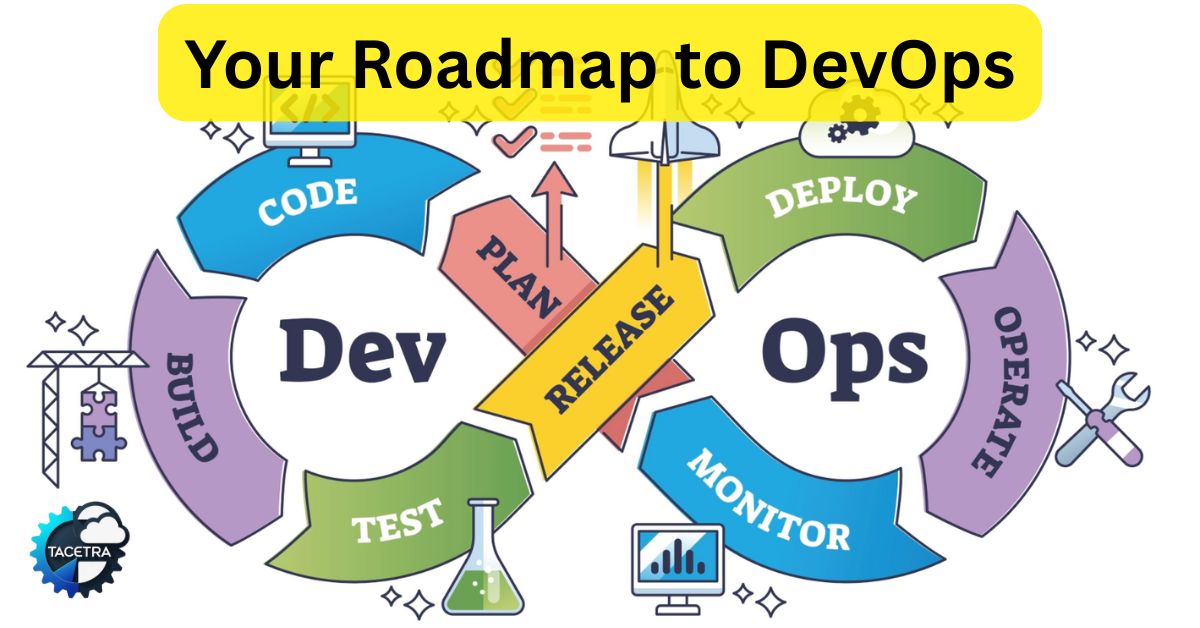
The roles of Cloud Engineer and DevOps Engineer are among the most sought-after and high-impact positions in modern technology. They sit at the intersection of development and operations, automating the entire software delivery lifecycle, from writing code to managing massive, scalable infrastructure in the cloud. For professionals looking to make a career switch, or for those new to the IT landscape, the path to these roles can seem dauntingly complex, filled with endless tools and ever-changing technologies.
This blog post is your practical, step-by-step roadmap, synthesizing years of industry advice—including insights shared by experienced professionals in online communities—to help you navigate this transition effectively. We’ll break down the core skills, suggest practical projects, and provide an actionable strategy for landing your first Cloud or DevOps role.
The Hard Truth: DevOps is Not Entry-Level
A common misconception is that a beginner can jump straight into a “DevOps Engineer” position. In reality, DevOps, Site Reliability Engineering (SRE), and Platform Engineering roles are typically positions for experienced professionals who have a deep background in either software development or systems administration/IT operations.
These roles often require the convergence of skills earned over several years in the trenches. Trying to apply for a mid-level DevOps job without a strong foundation is like aiming for a director role right out of college.
Practical Tip: Instead of immediately targeting “DevOps Engineer,” aim for entry-level adjacent roles that serve as excellent stepping stones. Look for titles like Cloud Support Associate, Junior Cloud Engineer, Systems Administrator, or Automation Engineer. These positions will give you the hands-on, real-world experience and troubleshooting skills essential for a successful transition. You can learn how to leverage your existing skills (even from non-technical backgrounds) as you progress along the path.
Phase 1: Building the Non-Negotiable Foundation
Every successful Cloud/DevOps career is built on a few fundamental pillars. These aren’t optional—they are the prerequisite knowledge that underlies every tool and technology you will use. Expect to dedicate significant time (1-3 months) to mastering these areas.
1. Linux Mastery
The vast majority of servers, containers, and cloud instances run on Linux. You must move beyond basic commands to achieve intermediate or advanced proficiency. This involves understanding file systems, process management, user and permission control, networking utilities (like ip and ss), and environment variables. Linux is the operating system of choice for DevOps work, and you should be comfortable using the command line exclusively.
2. Scripting for Automation
Automation is the heart of DevOps. While Infrastructure as Code (IaC) tools handle much of the heavy lifting, you will constantly need to write custom scripts to stitch tools together, automate repetitive tasks, and perform data manipulation.
- Bash/Shell Scripting: Essential for working within the Linux environment and automating administrative tasks.
- Python: The scripting language of choice for DevOps engineers. It’s used for writing utility functions, integrating with cloud provider APIs, and building more complex automation frameworks.
3. Networking and Security Fundamentals
When you deploy an application, you are responsible for making it accessible and secure. You need a solid grasp of the basics:
- OSI Model: How data travels across networks.
- IP Addressing & Subnetting: How to segment networks and allocate addresses.
- DNS: The domain name system and how it resolves requests.
- Firewalling: Static and stateful firewall concepts and security group management.
4. Version Control (Git)
Git is the industry standard for source code management. You must be proficient with Git commands, branching strategies, merging, and pull requests. This is foundational to the continuous integration (CI) aspect of DevOps.
Phase 2: Diving Deep into the Cloud
Modern infrastructure runs on the cloud. Mastering one major cloud provider is crucial. Do not try to learn all of them simultaneously—choose one and focus your energy.
Choose Your Cloud Ecosystem
- AWS (Amazon Web Services): The market leader with the deepest service portfolio. Excellent choice for broad job opportunities.
- Microsoft Azure: Strong in enterprises and environments with existing Microsoft infrastructure.
- GCP (Google Cloud Platform): Known for its strengths in data, AI/ML, and Kubernetes orchestration.
The Certification Strategy
Certifications serve two purposes: they give you a structured learning path and provide a verifiable credential for recruiters. A common and recommended starting point is the AWS Certified Solutions Architect – Associate or the Azure Administrator Associate. These cover the core services (Compute, Storage, Networking, Security) that underpin DevOps practices.
Phase 3: The DevOps Toolchain Triumvirate
Once you have your cloud foundation, you are ready for the specialized tools that define the DevOps methodology. This phase is all about practical, hands-on application. For a complete overview of the necessary skills, you can follow an organized resource like the DevOps Roadmap.
1. Infrastructure as Code (IaC)
IaC is the practice of managing infrastructure (networks, virtual machines, databases) through configuration files rather than manual procedures.
- Terraform: The leading vendor-agnostic tool for provisioning infrastructure across multiple clouds. This is a must-learn.
- Ansible: Excellent for configuration management, automating software installation, and managing existing infrastructure.
2. Containers and Orchestration
Containers package an application and its dependencies into a single, portable unit. Orchestration tools manage thousands of these containers in a production environment.
- Docker: Learn how to write
Dockerfiles, build images, and run containers locally. - Kubernetes (K8s): The industry standard for container orchestration. Understanding its core concepts (Pods, Deployments, Services, Ingress) is critical for any mid-to-senior-level cloud role. The Certified Kubernetes Administrator (CKA) certification is highly valued.
3. CI/CD and Observability
- Continuous Integration/Continuous Delivery (CI/CD): This is the pipeline that automates the building, testing, and deployment of code. Learn a popular tool like Jenkins, GitLab CI, or GitHub Actions. You must understand the Software Development Life Cycle (SDLC) principles that govern these pipelines.
- Observability: Once an application is running, you need to monitor it. Learn about logging, monitoring, and tracing using tools like Prometheus, Grafana, or the ELK Stack (Elasticsearch, Logstash, Kibana).
Interactive DevOps Roadmap for Beginners
- Linux commands & filesystem
- Networking basics
- Operating systems
- Security fundamentals
- Bash scripting
- Python fundamentals
- YAML & JSON
- Automation mindset
- Git basics
- GitHub / GitLab
- Branching strategies
- Pull requests
- CI/CD concepts
- Jenkins / GitHub Actions
- Build pipelines
- Automated testing
- Docker basics
- Dockerfiles
- Images & containers
- Container registries
- Kubernetes architecture
- Pods & services
- Deployments
- Helm basics
- Terraform basics
- Cloud provisioning
- State management
- Reusable modules
- AWS / Azure / GCP
- Compute & storage
- Networking
- IAM & security
- Prometheus
- Grafana dashboards
- ELK stack
- Alerting
- Collaboration
- Agile mindset
- Continuous improvement
- Reliability engineering
Practical Tips to Land the Job
The biggest differentiator for career switchers is practical experience demonstrated through projects. Certifications open doors, but projects close the deal.
- Build a Comprehensive Project Portfolio: This is the single most important step. Create a personal project that demonstrates your end-to-end capabilities.
- The Blueprint: Deploy a simple web application (like a static site or a basic Python/Node.js app). Use Terraform to provision the cloud infrastructure (VPC, EC2/Container Service, Database). Use Docker to containerize the app. Set up a CI/CD pipeline (using GitHub Actions) that automatically builds the Docker image and deploys the container to your cloud service whenever you push a code change.
- Showcase Your Work on GitHub: Your project repositories must be clean, well-documented, and include a clear
README.mdexplaining the architecture, tools used, and deployment steps. Recruiters will check your GitHub profile. - Network and Join Communities: Connect with like-minded professionals on platforms like LinkedIn, Slack, and Discord. Attend local meetups (even virtual ones). Networking can accelerate your job search and provide invaluable mentorship.
The path to becoming a Cloud and DevOps Engineer is a marathon, not a sprint. It demands commitment, hands-on practice, and a mindset geared toward continuous learning. Stick to this roadmap, build your portfolio, and your transition will be a successful one.
Further Reading: How to Turn Certifications into Real Job Offers: Expert Guide
Discover more from TACETRA
Subscribe to get the latest posts sent to your email.
